Air Cell Too Big Or Too Small
Use air-cell size as a practical signal for moisture loss and humidity review.
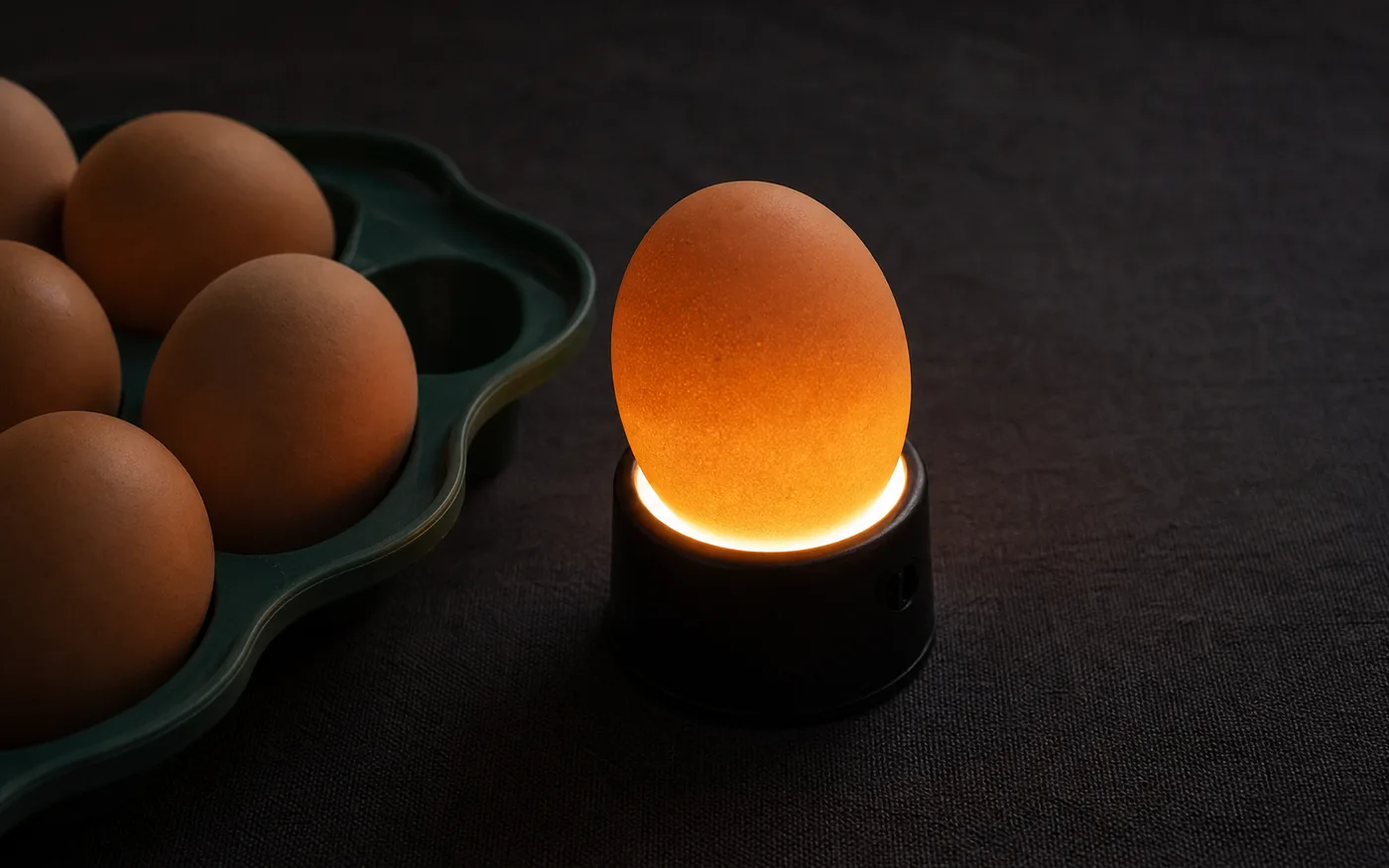
Show observation through the shell without graphic detail.
Candling turns humidity from a setting into something you can see inside the egg.
Quick Answer
A very large air cell usually suggests too much moisture loss; a very small air cell usually suggests too little. Confirm the pattern across multiple eggs before changing humidity.
This page is practical hatch guidance, not a veterinary diagnosis. It is checked against the sources listed below and should be adjusted to your incubator manual, species, and local conditions.
Observation path
Use what the user can see through the shell to guide the next decision.
- 1 Look
- 2 Compare
- 3 Decide
- 4 Record
What matters most
- Compare several eggs, not one unusual egg.
- Large air cells point toward excess moisture loss.
- Small air cells point toward limited moisture loss.
- Adjust future humidity gradually and keep notes.
Air cells show moisture loss over time
As an egg incubates, moisture leaves through the shell and the air cell grows. That change is why air-cell checks are useful when humidity numbers alone do not explain the hatch.
Read the direction, then review the cause
If many air cells are too large, review low humidity, long storage, thin shells, or excessive airflow. If many are too small, review high humidity, limited ventilation, large eggs, or water use.
Do not chase one candling result
Eggs vary. Use a pattern across the batch and compare the final hatch result before making a major change to the next incubation plan.