Sticky Chicks
What sticky residue can mean during hatch and what to review before changing the next batch.
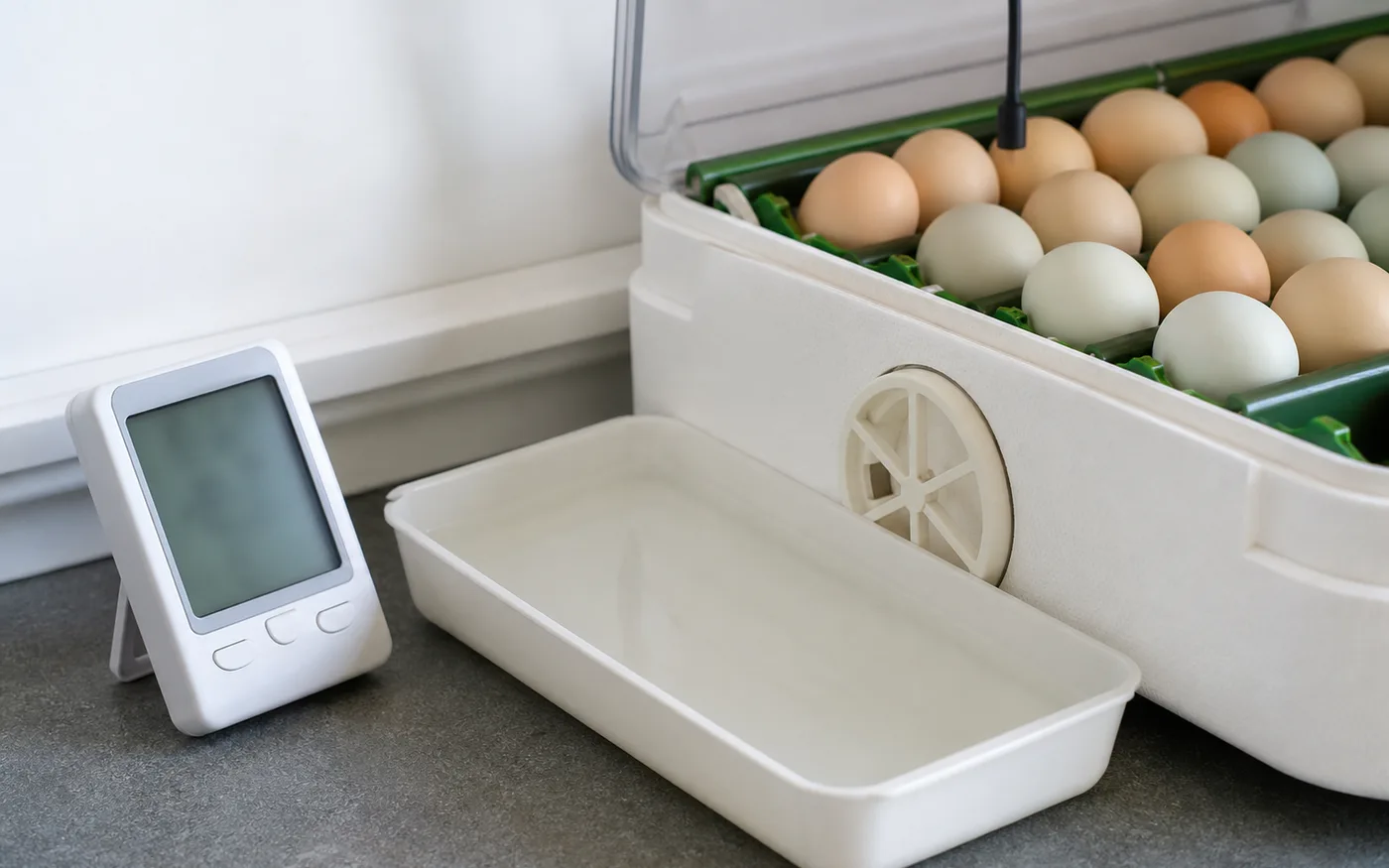
Show water, air, and moisture control as a visible setup.
The hatch is messy, chicks are slow to dry, and the result needs a calm review instead of a quick blame.
Quick Answer
Sticky chicks usually point to hatch conditions that need review, especially humidity, ventilation, egg handling, or timing. Do not treat one sticky chick as proof by itself; compare the whole hatch pattern first.
This page is practical hatch guidance, not a veterinary diagnosis. It is checked against the sources listed below and should be adjusted to your incubator manual, species, and local conditions.
Moisture path
Represent humidity as a pattern to manage, not a single number to chase.
- 1 Read
- 2 Compare
- 3 Adjust
- 4 Watch
What matters most
- Look at the whole batch before deciding the cause.
- Review humidity through the full incubation period, not only lockdown.
- Check ventilation and incubator cleanliness.
- Record what happened so the next batch can be adjusted carefully.
Start with the hatch pattern
One weak or messy chick can happen even in a decent hatch. A repeated pattern of sticky chicks, late hatching, wet shells, odor, or poor hatch rate is more useful than a single chick when deciding what to fix.
Review humidity without overcorrecting
Sticky hatch debris is often discussed with humidity problems, but the useful question is when the moisture problem happened. Review water use, room conditions, air cell development, and lockdown humidity before making a large change.
- If many chicks are wet or slow to dry, check whether humidity stayed high too long.
- If chicks pip but membranes dry tight, review whether humidity fell too low during hatch.
- If air cells were not tracked, add candling or weight-loss notes to the next batch.
Cleanliness and ventilation still matter
A sticky hatch can also feel worse when the incubator is dirty, poorly ventilated, or overloaded. Clean after every hatch, avoid blocking vents, and keep the next set small enough for the machine to hold steady conditions.