Tabletop Vs Cabinet Incubators
How to choose between small tabletop incubators and larger cabinet machines.
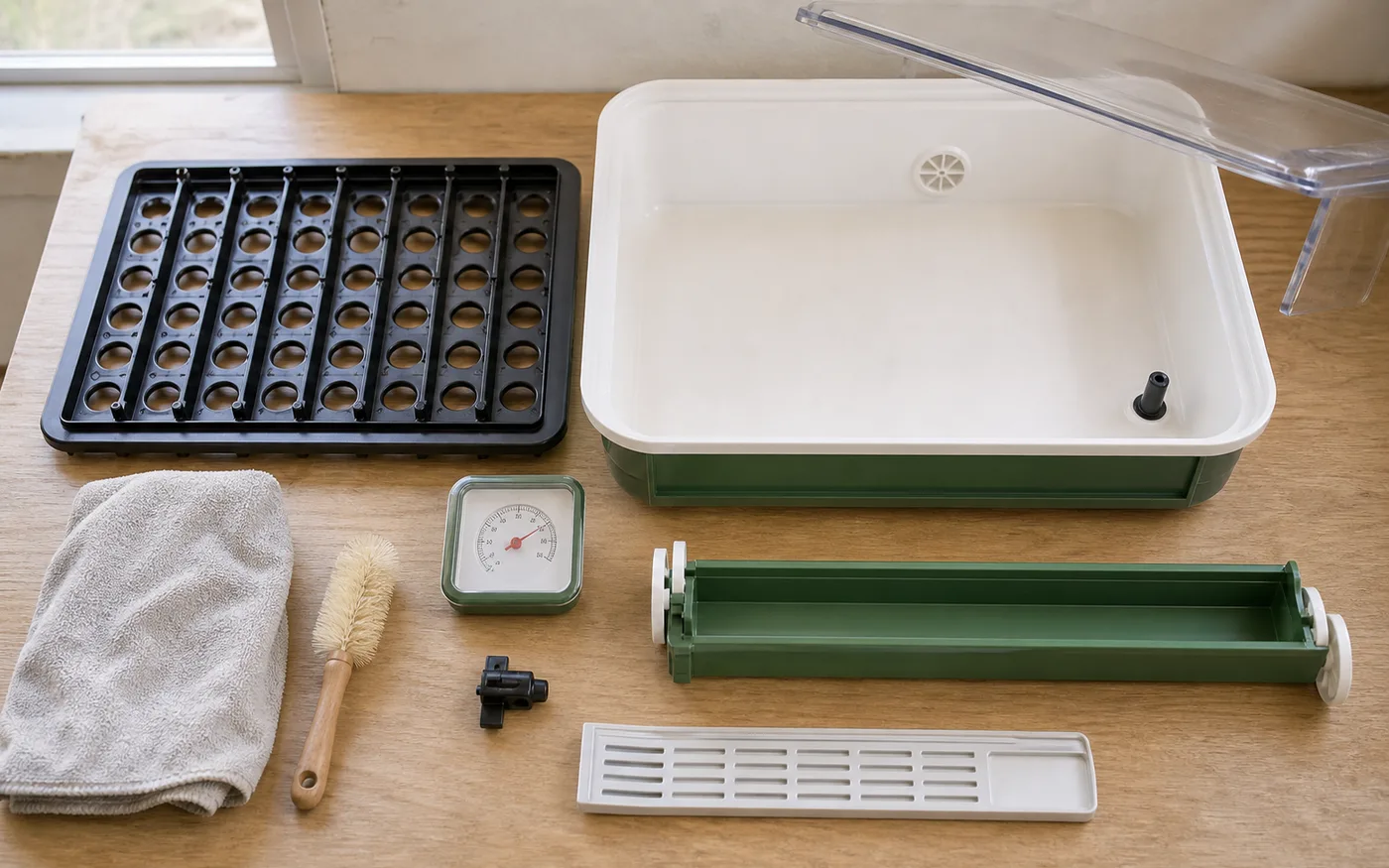
Show readiness, setup, and maintenance.
The scale decision, where more capacity can either help the plan or create a bigger problem.
Quick Answer
Tabletop incubators fit small batches, classrooms, and beginners. Cabinet incubators make sense when egg volume, staggered batches, and dedicated space justify the cost and management load.
This page is practical hatch guidance, not a veterinary diagnosis. It is checked against the sources listed below and should be adjusted to your incubator manual, species, and local conditions.
Equipment readiness
Represent gear as something to choose, test, clean, and trust before eggs depend on it.
- 1 Choose
- 2 Test
- 3 Run
- 4 Maintain
What matters most
- Tabletop units are easier to place, clean, and learn.
- Cabinet units support larger or more frequent hatches.
- Bigger capacity also means bigger brooder needs.
- The room must stay stable enough for the machine size.
Choose for the hatch you can manage
A bigger incubator does not automatically create a better hatch. It creates more eggs to monitor, more chicks to brood, and more consequences if temperature, turning, or sanitation goes wrong.
Tabletop units fit focused hatches
For a first hatch, a classroom hatch, or a small flock, a tabletop incubator can keep the workflow understandable. The tradeoff is lower capacity and sometimes less room for accessories.
Cabinet units need a system
Cabinet incubators can serve breeders or larger flocks, but they need reliable space, cleaning routines, egg records, brooder capacity, and a plan for staggered hatch timing.