Best Egg Incubators For Beginners
How beginners should choose an incubator without overbuying or trusting the wrong feature.
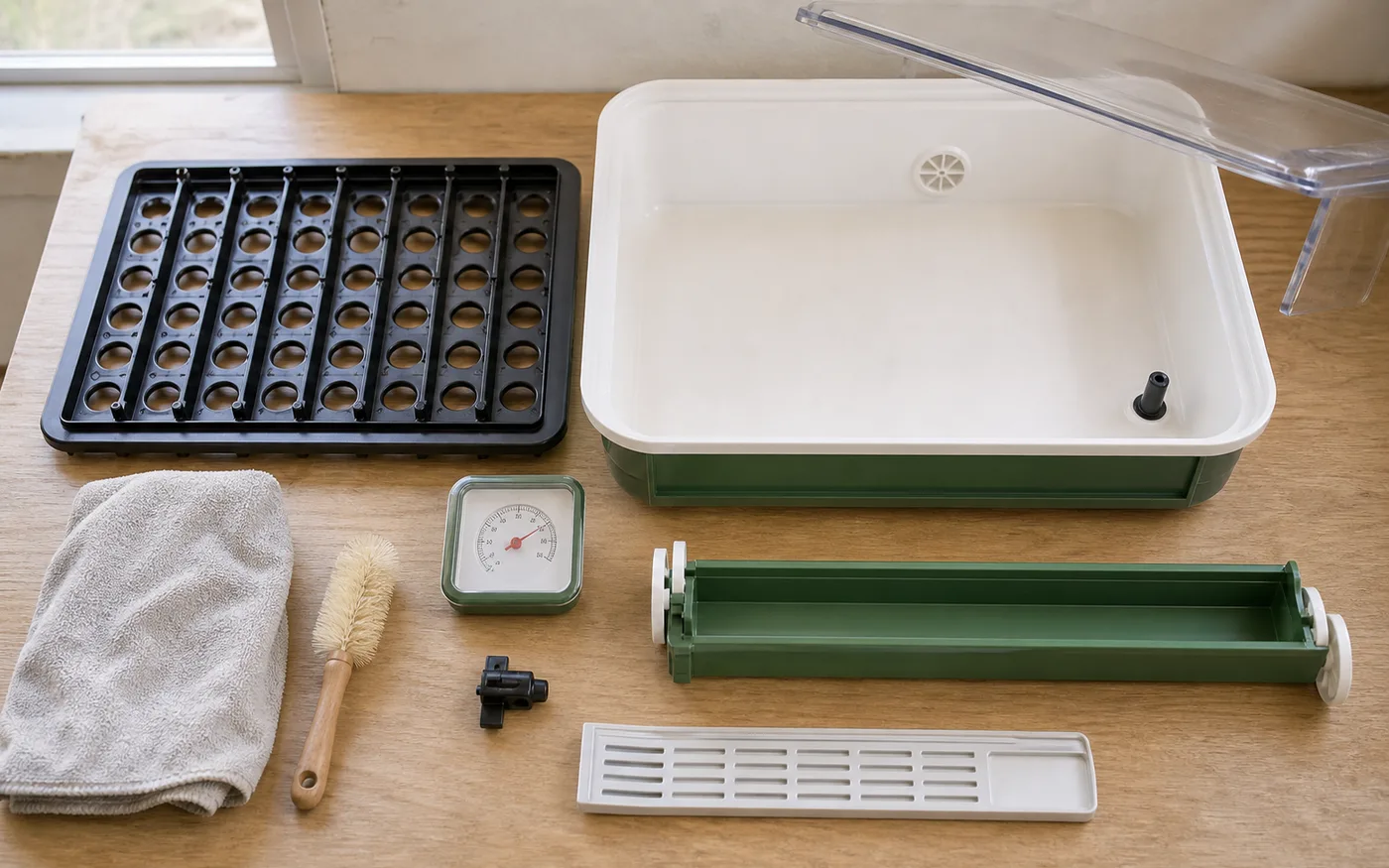
Show readiness, setup, and maintenance.
Before the first hatch, when choosing a machine decides how much daily friction the user will face.
Quick Answer
A beginner incubator should hold temperature steadily, be easy to clean, fit the number of eggs you can actually manage, and make turning, humidity, and viewing simple enough to use every day.
This page is practical hatch guidance, not a veterinary diagnosis. It is checked against the sources listed below and should be adjusted to your incubator manual, species, and local conditions.
Equipment readiness
Represent gear as something to choose, test, clean, and trust before eggs depend on it.
- 1 Choose
- 2 Test
- 3 Run
- 4 Maintain
What matters most
- Choose stable temperature control before cosmetic features.
- Buy enough capacity for real egg count, not an imaginary future flock.
- Look for simple cleaning access and visible water channels.
- Plan how eggs will be turned before you set them.
Start with reliability, not gadget count
The best first incubator is the one a beginner can run consistently. Clear controls, stable readings, good visibility, and easy cleaning usually matter more than a long feature list.
Capacity should match your hatch plan
A large cabinet incubator can be useful for a serious breeder, but it adds cost, space, and batch-management pressure. A smaller tabletop unit often makes more sense for classrooms, backyard flocks, and first hatches.
- Leave room for normal egg spacing and turning.
- Do not fill every slot just because the tray allows it.
- Think about brooder space before increasing egg count.
Check cleaning before buying
Hatch debris gets into corners, trays, water areas, and lid seams. If a machine is hard to clean after one hatch, it becomes a weak point before the next one.