Incubator Thermometer And Hygrometer
How to use thermometer and hygrometer readings without chasing bad numbers.
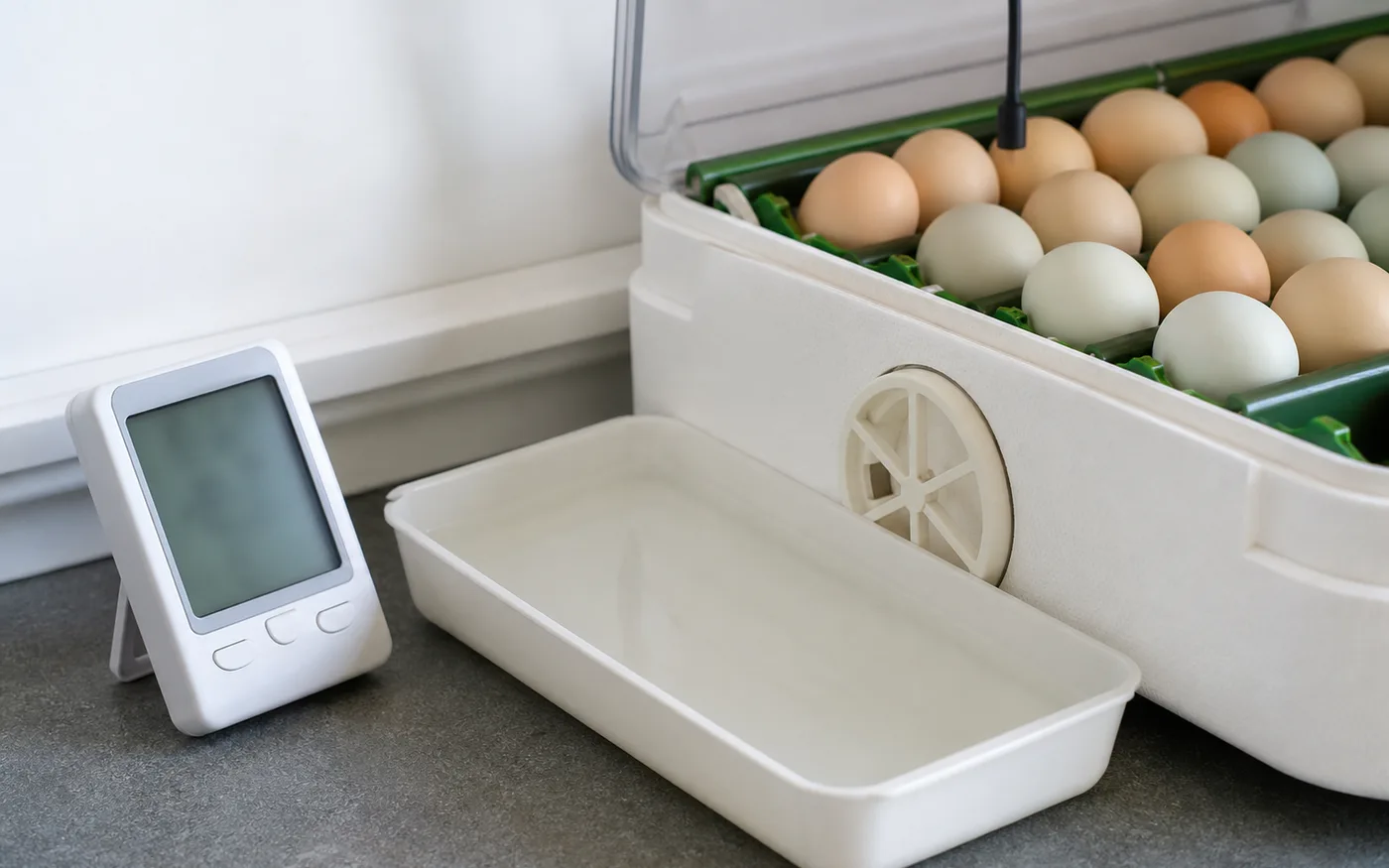
Show trusted measuring instead of guessing.
The measurement stage, where a wrong reading can cause the wrong correction.
Quick Answer
Use a trusted thermometer and hygrometer to understand the incubator pattern, not just one display reading. Probe placement, calibration, airflow, and room conditions can change what the number means.
This page is practical hatch guidance, not a veterinary diagnosis. It is checked against the sources listed below and should be adjusted to your incubator manual, species, and local conditions.
Equipment readiness
Represent gear as something to choose, test, clean, and trust before eggs depend on it.
- 1 Choose
- 2 Test
- 3 Run
- 4 Maintain
What matters most
- Compare readings before valuable eggs are set.
- Place probes where they represent egg conditions.
- Watch patterns instead of reacting to every small swing.
- Recheck equipment after cleaning, storage, or a bad hatch.
The built-in display is not the whole story
Built-in displays are useful, but they should not be treated as perfect. A second thermometer or hygrometer helps reveal whether the incubator is truly stable or only reporting a comfortable number.
Probe placement matters
A probe near a fan, water channel, wall, or lid can read differently from the air around the eggs. Put measurement tools where they help you understand the conditions the eggs experience.
Use readings as trends
Brief changes after opening the lid or adding water are normal. The more useful question is whether temperature and humidity return to the intended range and stay there over time.