Hatch Was Early Or Late
Use hatch timing as a clue for temperature patterns, egg storage, species, and calibration.
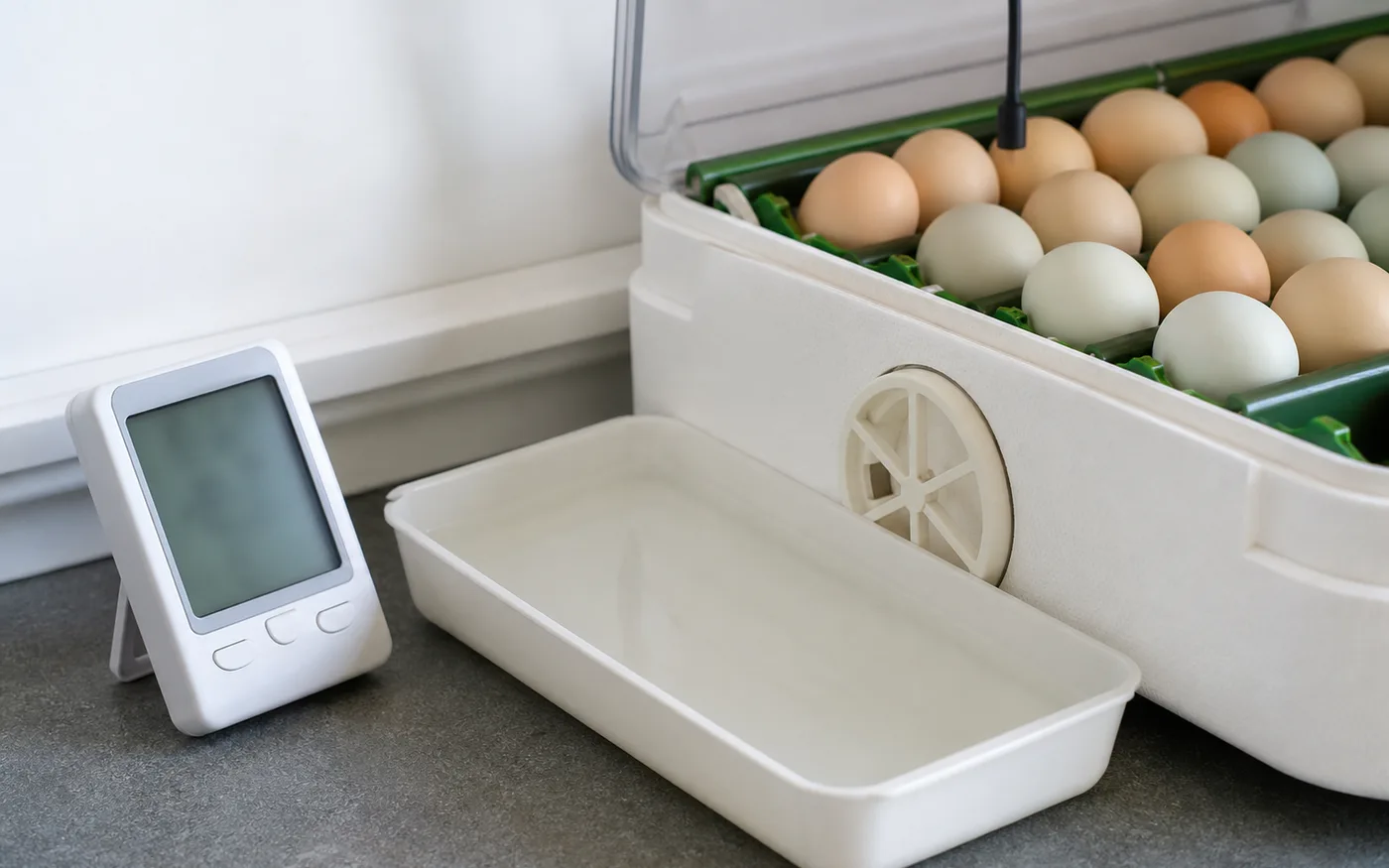
Show trusted measuring instead of guessing.
The chicks hatched, but the timing is telling you the incubator story may not match the calendar.
Quick Answer
Early or late hatches often point toward temperature patterns, but species, egg age, storage, and thermometer accuracy must be checked before changing the incubator.
This page is practical hatch guidance, not a veterinary diagnosis. It is checked against the sources listed below and should be adjusted to your incubator manual, species, and local conditions.
Hatch-window path
Keep the focus on stable conditions and careful timing during the highest-risk stage.
- 1 Stop turning
- 2 Raise humidity
- 3 Wait
- 4 Review
What matters most
- Confirm species and expected incubation length first.
- Early hatches can suggest warmer-than-intended conditions.
- Late hatches can suggest cooler-than-intended conditions.
- Calibrate or compare thermometers before the next set.
Check the calendar before the incubator
A hatch is only early or late after the species, set date, and expected incubation length are correct. Mixed species or uncertain set dates can make a normal hatch look wrong.
Temperature pattern is the main clue
Consistently warm conditions can speed development. Consistently cool conditions can slow it. A one-time reading is less useful than the pattern over the full hatch.
Fix the measurement before fixing the setting
Before changing the thermostat, compare your thermometer with a trusted backup and check probe placement. A wrong reading can lead to the wrong correction.