Egg Candler Buying Guide
How to choose a candler for shell color, egg size, and repeated checks.
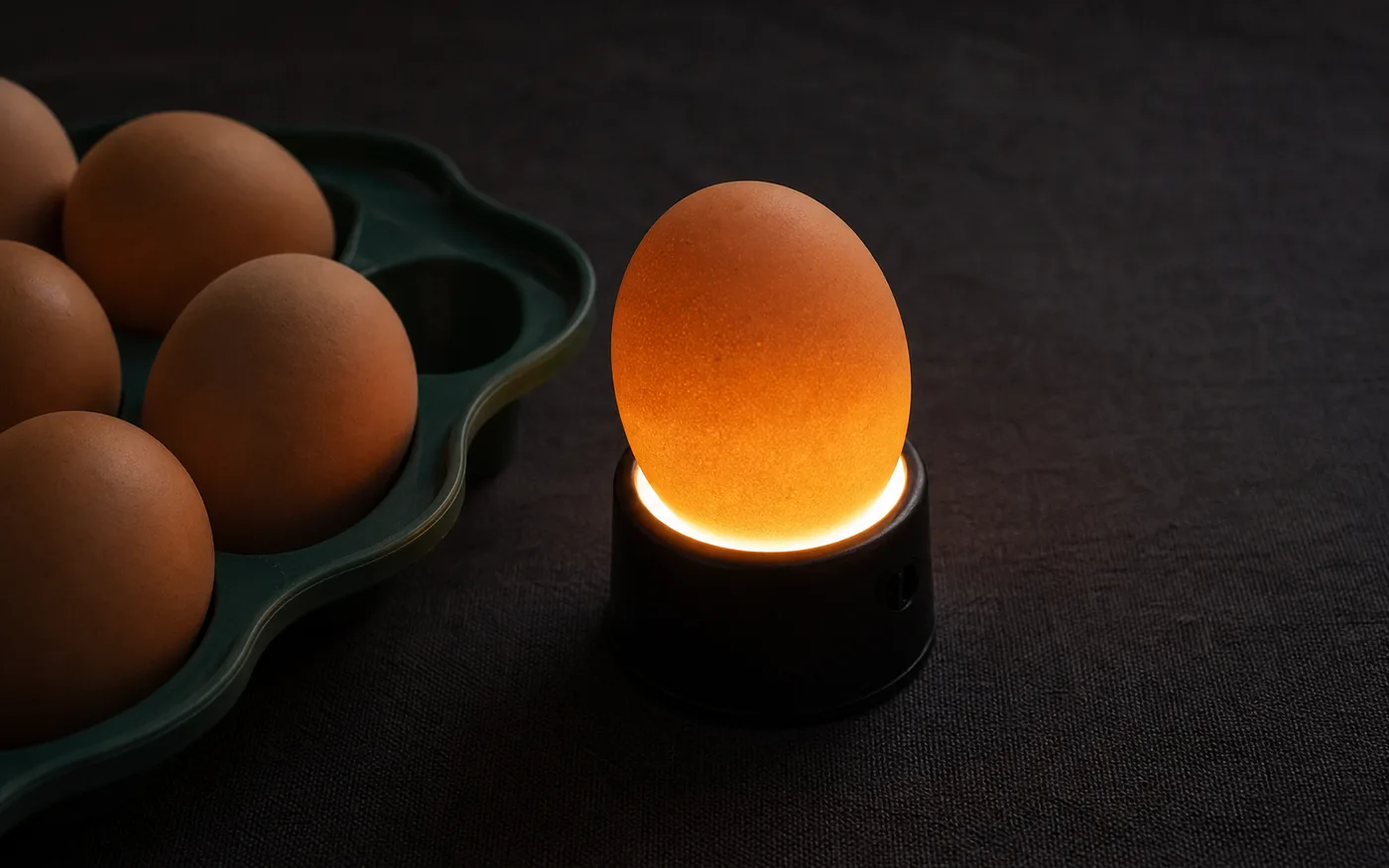
Show observation through the shell without graphic detail.
The observation-tool stage, where better light makes better decisions possible.
Quick Answer
Choose a candler that is bright enough for the eggs you hatch, comfortable to handle briefly, and shaped so light goes through the egg instead of spilling around it.
This page is practical hatch guidance, not a veterinary diagnosis. It is checked against the sources listed below and should be adjusted to your incubator manual, species, and local conditions.
Equipment readiness
Represent gear as something to choose, test, clean, and trust before eggs depend on it.
- 1 Choose
- 2 Test
- 3 Run
- 4 Maintain
What matters most
- Dark shells need stronger, focused light.
- The candler should fit the egg without overheating it.
- A dark room matters as much as the tool.
- Candling should be brief and purposeful.
Brightness matters, but focus matters too
A bright light that leaks around the shell can still be hard to use. The best candler for a beginner sends focused light through the egg and blocks glare from the user.
Match the candler to the eggs
White chicken eggs are usually easier to read than dark brown, blue, green, duck, or speckled quail eggs. If you hatch darker shells, choose a stronger tool and expect more uncertainty.
Use the tool to make decisions
Candling is not about checking every egg every day. Use it at planned points to confirm development, air-cell growth, clears, blood rings, or late-stage questions.